
Skills Training for All?
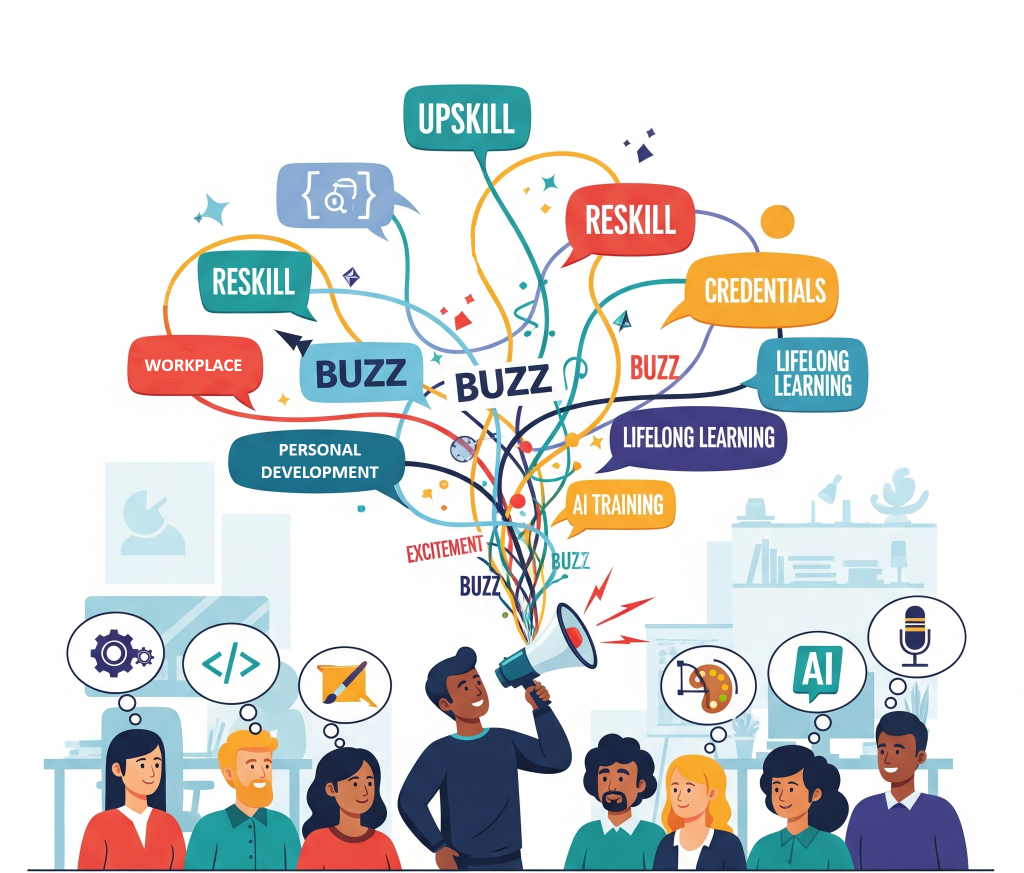
An evolving global job market has seen a strong focus on professional skills training across all industries. In part to identify skills gaps and in part to refine the workforce, employers and education policy makers have doubled down on drumming home the indispensability of delivering quality training programmes.
The benefits are indeed far-reaching, improving personal well-being, workplace efficiency, and societal cohesion. In Europe, education policy makers have set ambitious targets to both close identified gaps and help individuals and communities thrive. Employers and HR managers across the globe today prioritise skills over impressive qualifications to make workforces more agile and effective.
Despite the buzz around lifelong learning, many people across Europe struggle to attain professional training, facing physical access issues or financial constraints.
This blog post analyses the current skill needs, explores related research, and outlines the challenges for both learners and educators.
Why Skills Training Matters
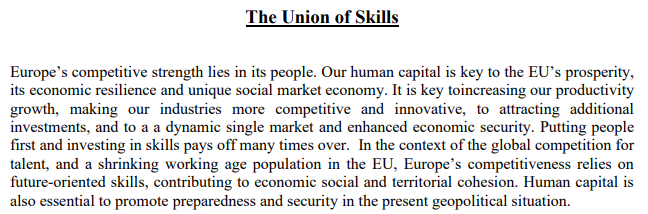
With staff and skill shortages thwarting economic growth in Europe, the European Commission published its guidance on skill development in March 2025, clearly setting out its philosophy in the introduction.
Past and present efforts to address skill shortages have been redoubled on the back of the latest employment statistics. In 2023, four out of five employers had difficulties finding staff with the right skill set. One-third of employees had mismatched competencies and were either underqualified or overqualified, according to EU research.
These shortages led one quarter of recruiters to hire staff without the right qualifications. Over 40 per cent of companies provided on-site training to close existing skill gaps.
Hardest Hit Industries
According to Eurobarometer research, the EU has identified 42 professions in ten different sectors as the most short-staffed.
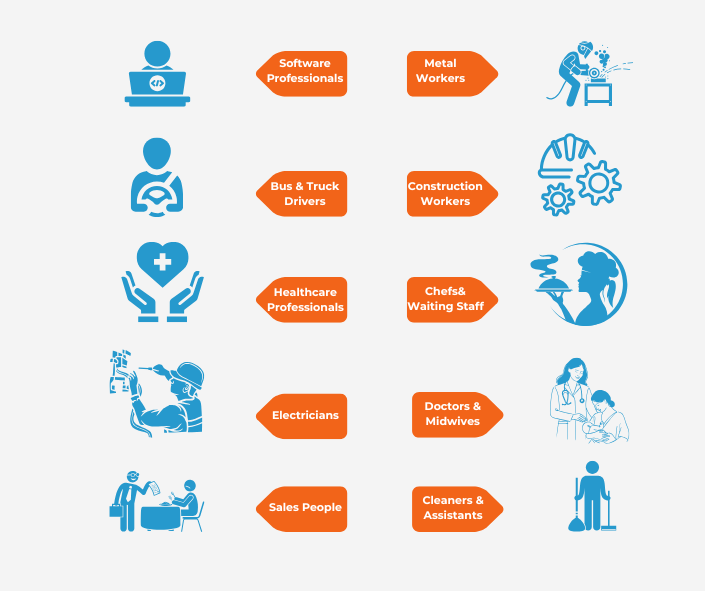
The Commission also projects a need for 3.5 million skilled workers for the expanding green technology sector by 2030. As of 2025, there are over 3 million job vacancies in Europe despite numerous initiatives.
Eurostat research reveals that over one-fifth of people between the ages of 20 and 64 are unoccupied, with women, low-skilled workers, immigrants, and young people likely to represent the bulk of this group.
Multiple barriers to skills training and lifelong learning exist, leaving a substantial pool of untapped talent.
Who Is Missing Out on Skills Training and Why?
If EU governments want to draw from the well of underutilised talent, the groupings facing the most substantial access issues must be identified and supported comprehensively.
Programme delivery can be public, through employers, or private education institutions. Training availability, cost, selection, and education level vary not only from country to country but also regionally.
In 2022, nearly 43 per cent of people between the ages of 25 and 64 did not, nor did they want to participate in training.
Three years on, a large majority still does not feel the need to seek out continuing education, but a sizable group, namely a quarter of the EU population, wishes to do so but is hindered in some way.
Back in 2022, Eurostat research identified the following obstacles to learning:
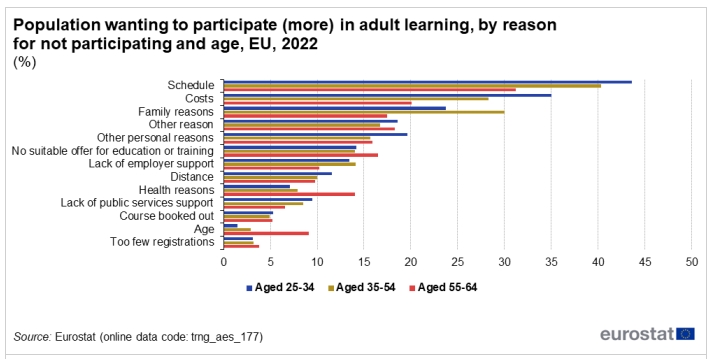
Many of these obstacles relate to societal structures, meaning they can be tackled and overcome by local stakeholders. With EU funding and the support of local governments, costs could be reduced, employers could be encouraged to support staff wishing to train, and course locations could be expanded and physical access facilitated. Public services could prioritise delivering access to training on a local level.
Knowing the core reasons for the failure to participate in skills training, let’s identify the people who struggle most.
Laying Bare the Disparities & The Well of Untapped Potential
A closer look at the groupings missing out points to women, migrants, low-skilled workers, young people from ethnic minorities, older workers, and people with disabilities.
Missing out on the multilayered benefits of continued learning impacts on a deeply personal and wider societal level. While the EU as a bloc, national and local governments, as well as business stakeholders, have attracted millions of adult learners back into education, the above-mentioned populace requires additional support.
Public sector efforts are necessary to encourage them back into education and provide the support they need to do so. Only in direct conversation with individuals will education providers and governments identify the pressing needs, allowing them to address them adequately. Community groups play a key role in reaching out to hesitant learners and gently urge them back to education, highlighting the very many personal benefits.
Additional practical supports may include basic services such as English classes or childcare, public transport options for access, alongside one-to-one career guidance and tuition. Only on a local level can individuals be encouraged to upskill, be that through EU or government initiatives, employer efforts or indeed local community education schemes.
If the quarter of EU adults wishing to learn get the opportunity to do so, they will not only grow personally but also professionally. As a result, many employers will have a new pool of skilled and enthusiastic candidates.
EU Initiatives to Onboard Hesitant or Unsupported Learners
The EU has created numerous initiatives to reach all the above-mentioned demographics who may be missing out on skills training for one reason or another.
Early School Leavers
Primarily, the Commission supports early school leavers through the European Social Fund. The ESF part-fund national initiatives. The aim is to reduce the number of early school leavers and ensure that, upon leaving school, young people either progress to third-level education or gain meaningful employment.
Migrants and Ethnic Minorities
The EU Action Plan on Integration and Inclusion 2021-2027 has four key pillars:
- Inclusive Training and Education: Providing language and civic education, creating high-quality childhood and adult education, recognising non-EU school certificates and job qualifications, and supporting educators to create diverse, inclusive, and cohesive class dynamics.
- Reimaging Curricula: Adjusting existing pedagogy and curricula to lay the foundation for migrant integration.
- Health & Education Access: for all migrants.
- Fostering Communication and Collaboration: Setting up opportunities to meet, greet, discuss, and collaborate for communities and migrants.
Related key EU programmes include: Science4Refugees, Erasmus+, the School Education Gateway, and the SIRIUS Network.
Women
The EU supports women through various initiatives relating to pay equality, return to the workplace after pregnancy and birth, skills training to help women return to the workplace after an extended absence, and education projects to encourage girls and young women to train in STEM.
People with Disabilities
The European Agency for Special Needs and Inclusive Education (EASNIE) provides national governments with a platform to meet and share best practices and resources. The aim is to deliver inclusive and meaningful education to all people.
Older Workers
The New European Agenda for Adult Learning sets out structures to encourage adults to engage in lifelong learning and upskilling. Employability and economic participation are the principal goals.
Low-Skilled Workers
Looking at the graph below, it is not surprising that the EU has numerous initiatives to entice low-skilled workers to participate in skills training.
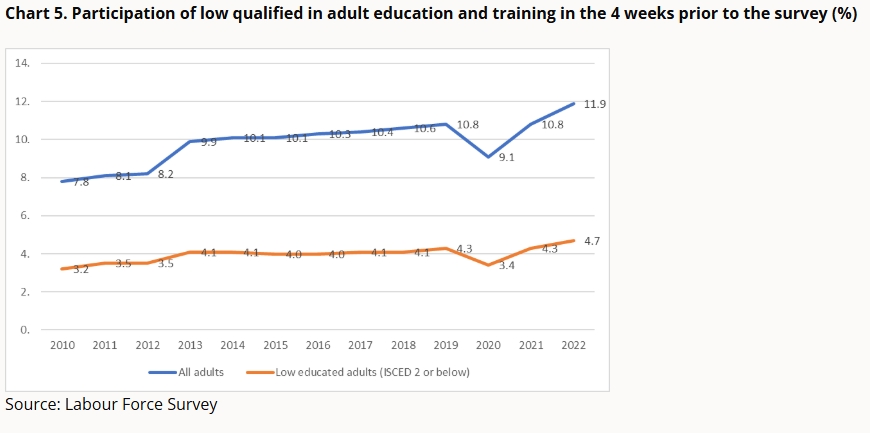
These initiatives include Upskilling Pathways, with the EU supporting member states in the creation and delivery of training programmes for low-skilled workers.
Erasmus+ programmes have also enabled staff from shared industries to participate in exchanges for training, networking, and skill development. The mobility programmes continue to provide professional development and skill enhancement opportunities for thousands of employees every year.